
What’s Really Happening in the Composite Decking Market?
By Lawrence Winterburn – Updated January 2025
TL;DR – Composite Decking VS Wood -The Brutal Truth
- 95% of composite decking failures are bad installations, not bad materials
- Only 5-10% of contractors can properly build composite deck frames
- Wood still dominates 60-65% of the market for good reasons
- “Lifetime warranties” exclude labor, disposal, and most real-world damage
- Composite costs 2-3x more than wood but can’t be refinished when it fades
- In northern climates, wood-fiber composites develop trip hazards after 7-12 years from freeze-thaw swelling
- PVC decking does not swell from the freeze thaw cycle, however it is a bigger investment
- Bottom line: Unless you find one of the rare qualified installers, wood is safer and more economical
The decking landscape has shifted dramatically. Here’s what you need to know before spending thousands on your next deck.
The 2025 Composite Decking Market Reality
Wood Still Dominates
Despite decades of composite decking marketing, the majority of decks built today are still wood. According to industry data from the North American Deck and Railing Association, wood accounts for approximately 60-65% of new deck construction in residential markets. Why? Because wood works, contractors understand it, and homeowners recognize genuine value when they see it.
Composite and PVC products remain upscale options for well-heeled consumers who prioritize low maintenance over initial cost. This isn’t likely to change—composite represents roughly 25-30% of the market, with the remainder being alternative materials like aluminum or steel.
The PVC Surge
High-quality PVC products are experiencing significant growth in 2025, with market analysts reporting 15-20% year-over-year increases in premium PVC sales. Products from established manufacturers like Azek and WOLF are gaining market share among discerning homeowners who understand the difference between quality and marketing hype. Meanwhile, first-generation and low-grade composites continue their decline, with several manufacturers quietly discontinuing underperforming product lines.
Offshore Composite Decking Brands Under Pressure
Cheaper offshore composite brands are being heavily discounted—we’re seeing 30-40% price reductions on some imported products as retailers try to move inventory. If a deal seems too good to be true, it probably is. These products often fail prematurely and leave you with no viable warranty coverage when the parent company dissolves or simply stops responding to claims.
The Hidden Crisis: Framing Quality
Here’s the uncomfortable truth that composite manufacturers don’t advertise: most composite and PVC deck failures aren’t material failures—they’re installation failures. After thirty-plus years in this business, I’ve inspected hundreds of failing composite decks, and the overwhelming majority had nothing wrong with the decking material itself. The problem was the frame underneath. Getting PVC right is a framing problem before it is a decking problem, and it is why we build rather than subcontract across the region, including Hamilton.
The Contractor Competency Gap
Based on my experience reviewing deck installations across Ontario and observations shared by building inspectors and warranty adjusters, I estimate only 5-10% of contractors can build a deck frame properly for composite or PVC decking that will last 30-50 years, remain perfectly flat, not resemble “the ocean” after five years, and support the material properly without sagging. This isn’t an exaggeration—it’s a crisis that costs homeowners tens of thousands of dollars every year. The composite manufacturers know this, which is why many have developed contractor certification programs, yet these programs reach only a fraction of installers actually putting down composite decking.
Why Composite Framing is Different
Building with man-made decking requires entirely different techniques than wood, and this is where most contractors fail because they simply apply wood-building methods to a completely different material:
Wood Deck Framing:
- Boards should have gaps (1/8″ to 1/4″) for drainage and expansion—NEVER install boards tight against each other
- Standard 16″ joist spacing works fine for most species
- Natural material accommodates minor frame imperfections
- Movement is predictable and relatively minimal
- Fastener choices are straightforward
- Small deviations in flatness aren’t visible
Composite/PVC Deck Framing:
- Requires precisely calculated gap spacing based on installation temperature, which can range from no gap at 90°F to 1/4″ gap at 40°F depending on board length
- Often needs 12″ joist spacing or less to prevent deflection—composite is heavier and less rigid than wood
- Frame must be laser-flat because composite telegraphs every imperfection—a 1/4″ deviation becomes visually obvious
- Expansion and contraction can exceed 2-3″ on a 20′ board with temperature swings from -40°F to 110°F
- Requires specialized fastening systems that allow movement
- One wrong detail creates permanent waves that cannot be fixed without tearing everything up
The Northern Climate Nightmare
In climates with freeze-thaw cycles, composite products containing wood fiber face an additional challenge that becomes apparent after 7-12 years of service. Repeated freezing and thawing causes the wood fibers to absorb moisture and expand, then contract, leading to progressive swelling particularly noticeable at board end-cuts. This creates a “mushrooming” effect where board ends rise above the surface. At breaker boards—where decking changes direction or meets steps—this swelling creates actual trip hazards, not just aesthetic problems. I’ve measured end-swelling of 1/4″ to 3/8″ on decade-old composite boards, enough to catch a toe and cause a fall. This is why solid PVC products without wood content perform significantly better in northern climates like Ontario, Michigan, Minnesota, and other areas with hard winters.
The Expensive Composite Deck Reality
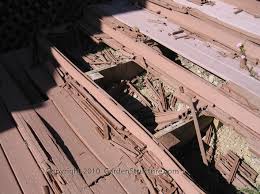
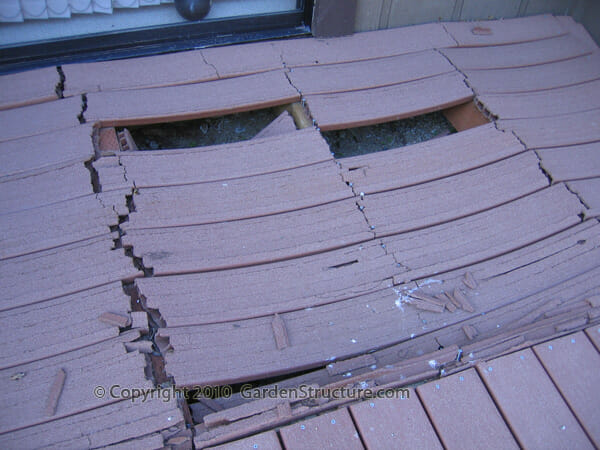
When an inexperienced builder installs composite decking on a substandard frame, you get visible sagging between joists within 2-3 years, wave patterns across the entire deck surface, gaps that open and close dramatically with the seasons creating a “venetian blind” effect, fasteners that pop through or pull out completely, and a deck that looks permanently cheap despite costing premium prices. This is always a waste of money. You’re paying $25-35 per square foot for composite installation but getting results that look worse than a $15 per square foot wood deck because the foundation is wrong. I’ve replaced three composite decks this year alone where the homeowner spent over $40,000 only to have an unusable deck within five years—and in each case, the composite material itself was fine; the framing was catastrophically bad.

2025 Major Composite Decking Manufacturers
Below is a master list of current composite and PVC decking manufacturers ranked by market presence and sales volume. Always review the actual warranty before purchasing—warranties change frequently and have critical exclusions that can void your coverage entirely.
Premium Tier Decking (Highest Quality & Market Share)
Azek (TimberTech)
- Premium PVC Products
- Industry-leading warranties
- Warranty:
- Notes: Owned by CPG Building Products; merger combined two major brands under one corporate umbrella
WOLF Home Products
- Capped PVC Decking
- Excellent training program for builders
- Warranty:
- Notes: One of the few companies that includes labor coverage with minimal builder requirements—only requires online product training
Fiberon
- Capped Composite
- Good color retention
- Warranty:
- Notes: Part of Fortune Brands, good corporate stability
Trex
- Market Leader (approximately 40% market share)
- Capped Composite Products but contains wood pulp within recycled plastic
- Warranty:
- Notes: Resolved previous mold issues with capped products; subject of previous class actions but current Transcend and Enhance lines performing well
Mid-Tier (Established Brands)
Deckorators
- Aluminum and composite rail systems
- Mineral Based Composite Decking
- Warranty:
Fortress Building Products
- Steel framing systems
- Composite options
- Warranty:
MoistureShield
- Solid composite core
- Can be installed in-ground or in water
- Warranty:
- Notes: Unique water-resistant properties
Value Tier (Exercise Caution)
NewTechWood (UltraShield)
- Growing market share
- Warranty:
- Notes: Offshore manufacturing, review warranty coverage carefully
Various Offshore Brands
- Heavy discounting in 2025
- Warranty coverage questionable
- Company longevity uncertain
- Names change frequently
Specialized Products
TruGrain
- Rigid PVC that accepts staining
- Unique wood-grain appearance
- Warranty:
- Notes: Allows custom color finishing, essentially paintable PVC
The Warranty Game: What They’re Really Promising (And What They’re Not)
This is where composite decking marketing becomes creative fiction. Let’s break down what “lifetime warranty” actually means.
What Most Composite Decking Warranties DON’T Cover
Read every word of the warranty document—not the marketing brochure—before purchasing. Most composite warranties exclude or severely limit coverage for:
Labor costs to remove and replace defective materials—this is the big one. The materials might be free, but you’re paying $8-15 per square foot in labor to tear out the old deck and install the replacement. On a 400 square foot deck, that’s $3,200-6,000 out of your pocket for the manufacturer’s defect.
Disposal costs for failed decking—expect $500-1,500 depending on your location and deck size.
Damage from “improper installation”—conveniently vague and broadly applied. If you can’t prove your installer followed every specification perfectly, they’ll deny the claim. I’ve seen claims denied because fasteners were 1/4″ off the recommended spacing.
Fading beyond specific percentages—most warranties allow 15-25% color change before they’ll consider it a defect. That’s massive fading by any reasonable standard, enough to make your deck look washed out and aged.
Mold in certain conditions—despite marketing claims of “mold-resistant,” many warranties exclude mold if it’s determined that “insufficient cleaning” occurred. Since there’s no objective standard for “sufficient,” they can deny nearly any mold claim.
Surface staining from common substances—cooking grease, suntan lotion, pool chemicals, fertilizers, rust from furniture, food and beverages, and more are typically excluded. Basically, if you actually use your deck, stains aren’t covered.
Damage from pool chemicals—if you have a pool, read this section carefully. Chlorine and salt can void warranties entirely.
“Normal weathering”—another beautifully vague term that allows manufacturers to deny claims for any degradation they deem “normal.”
Structural performance issues—sagging, warping, or deflection often aren’t covered unless they exceed specific measurements that are rarely achieved in practice.
The Labor Warranty Trap
In 2025, some manufacturers finally offer labor coverage, but with catches designed to limit their actual exposure:
WOLF: Best in class—requires only online product training for contractors to qualify. This is reasonable and accessible. Labor coverage typically runs 5-10 years depending on product line.
Fiberon: Builder must be enrolled in their IBP (Innovative Builder Program), which requires annual renewal, minimum purchase volumes, and ongoing training requirements. If your builder isn’t enrolled when the defect appears, you’re out of luck.
Trex: Their Pro Platinum warranty requires builders to purchase $200,000+ in Trex products annually to qualify. This effectively limits coverage to large commercial contractors. The average residential deck builder will never hit this threshold, meaning their installations don’t get labor coverage.
Azek/TimberTech: Requires contractor certification through their training program, which is reasonable, but certification must be current at the time of both installation and claim. If your installer’s certification lapsed, your coverage evaporates. Gardenstructure and Designersdecks both use this product nearly exclusively–and we have had no warranty issues.
Most others: Zero labor coverage, period. You get free replacement boards (maybe) and a bill for $5,000-8,000 in installation labor.
Translation: If the product fails and your builder isn’t “qualified” by the manufacturer’s specific program at the exact moment of installation and the exact moment you file a claim, you’re paying full labor costs to fix the manufacturer’s defect. This isn’t insurance—it’s a shell game designed to minimize warranty payouts.
The Prorated Scam
Many warranties are “prorated,” meaning YOUR cost increases over time while manufacturer responsibility decreases. Here’s how the scam typically works:
Material Replacement Warranties:
- Years 1-10: Manufacturer covers materials (but never labor or disposal)
- Years 11-15: You pay 25-50% of material costs
- Years 16-20: You pay 50-75% of material costs
- Years 21-25: You pay 75-90% of material costs
- Year 25+: You’re essentially on your own
Fade and Stain Warranties (even worse):
- Years 1-5: Limited coverage only if fading exceeds a specific percentage (often 15-25%)
- Years 6-10: Prorated coverage kicks in—you start paying percentages
- Years 11-25: Your payment percentage increases annually (30%, 40%, 50%… up to 90%+)
- The aging curve is designed so claims peak exactly when your coverage bottoms out
So that “lifetime warranty” means when your deck shows problems at year 12—which is exactly when many composite decks start looking rough—you’re paying 50-75% of material costs. Add excluded labor ($8-15 per square foot) and disposal costs ($500-1,500), and you’re covering 80-90% of the total replacement cost for their defective product.
The mathematical reality: A 400 square foot deck replacement at year 12 might cost:
- Materials: $4,000 (50% your cost under prorated warranty = $2,000)
- Labor: $5,000 (100% your cost—never covered = $5,000)
- Disposal: $800 (100% your cost—never covered = $800)
- Total out of pocket: $7,800 of $9,800 (80%)
The manufacturer’s “generous lifetime warranty” covers $2,000 of a problem they created. This is why warranty claims are so rare—homeowners realize it’s barely worth the hassle.
The Company Longevity Problem
A warranty is only as good as the company behind it. As covered below, dozens of composite manufacturers have gone bankrupt, been acquired, or simply disappeared. When that happens, your “lifetime warranty” becomes worthless instantly. The acquiring company has no obligation to honor previous warranties unless specifically stated in the acquisition agreement, and they rarely do.
Before purchasing, research the manufacturer’s financial stability. Are they publicly traded? Part of a larger corporate entity? Have they been around for 20+ years? A startup offering a “50-year warranty” is promising something they cannot possibly guarantee.

Expansion and Contraction: The Engineering Challenge
Man-made decking expands and contracts dramatically more than wood. PVC and composite materials have thermal expansion coefficients 4-8 times higher than wood. A 20-foot composite board can expand 2-3″ with temperature swings from winter to summer in northern climates.
Proper Installation Requirements
Gap sizing must account for installation temperature—a board installed at 40°F needs almost no gap (1/16″) because it will shrink. The same board installed at 90°F needs 1/4″ gaps because it will expand. Most installers ignore this completely.
Gaps should close tight in summer heat and open in winter cold. If you have large gaps in summer, something is wrong. If boards are touching in winter, they’ll buckle when summer arrives.
Fastening systems must allow lateral movement—rigid fastening will cause boards to warp, buckle, or pull fasteners through. This is why hidden fastening systems aren’t just aesthetic; they’re structural requirements for composite.
End joints require special attention—this is where expansion is most visible and where structural issues often manifest. Picture-frame borders need expansion relief cuts. Perimeter boards need room to grow. Breaker boards need expansion gaps maintained.
What Happens When Done Wrong
Boards buckle in summer heat, creating ridges that are trip hazards. Massive gaps appear in winter, sometimes exceeding 1/2″, wide enough to trap heels and turn ankles. Fasteners pull through or break under expansion stress. “Speed bumps” form at board ends where expansion has nowhere to go. The deck becomes a liability, and fixing it requires complete removal and reinstallation—there’s no simple repair.
According to my observations across hundreds of installations, 95% of installers get this wrong. They install it like wood, treat it like wood, and within one year, problems emerge. By year three, the deck looks terrible and performs worse.
Composite Decking vs Wood: The Honest Comparison
Composite Decking Advantages
Lower long-term maintenance if installed properly—the key phrase being “if installed properly,” which happens less than 10% of the time. No yearly staining or sealing required. Consistent appearance initially, before fading and wear set in. Splinter-free surface, though some products develop surface roughness over time. Some products have excellent warranties, though as detailed above, “excellent” is relative and carefully limited.
Composite Disadvantages
Composite Decking costs 2-3x that of premium wood—expect to pay $25-35 per square foot installed versus $15-20 for quality wood. Requires expert installation, which is genuinely rare in the market. Shows every frame imperfection because the material doesn’t flex or accommodate like wood. Fades over time despite marketing claims—expect noticeable color change within 5-7 years. Cannot be refinished to restore appearance—you’re stuck with how it looks. Replacement boards won’t match faded originals, creating patchwork appearance for any repairs. Heat retention makes surfaces too hot for bare feet in direct sun—surface temperatures can exceed 130°F. Susceptible to scratching and staining despite “stain-resistant” marketing. Warranty often worthless when actually needed due to exclusions and limitations. In northern climates, wood-fiber composites develop end-swelling and trip hazards after 7-12 years of freeze-thaw cycles.
Premium Wood Advantages
Known performance characteristics documented over centuries of use. Beautiful natural appearance that many find superior to plastic imitations. Can be refinished to look new—sanding and restaining brings wood back to original appearance. Contractor expertise widely available—finding a qualified wood deck builder is easy. Predictable lifespan: pressure-treated pine 15-25 years, cedar/redwood 20-30 years, tropical hardwoods (Ipe, Cumaru) 40-50+ years. Repairable and replaceable—damaged boards can be swapped without visible color mismatch. Cost-effective even with maintenance factored in. No expansion issues when properly gapped. Splinters are manageable with proper material selection and maintenance.
Premium Wood Disadvantages
Requires regular maintenance—annual cleaning and biennial staining/oiling is necessary. Will weather and turn gray if not maintained, though some homeowners prefer the weathered look. Needs yearly cleaning minimum and re-oiling or restaining every 1-2 years depending on climate and exposure. Initial installation costs are lower, but maintenance costs are ongoing.
The Deck Maintenance Cost Reality
Composite manufacturers love to calculate “lifetime maintenance savings” in their marketing materials. Let’s run real numbers for a typical 20×20 deck (400 square feet) over 20 years:
Wood Deck (Ipe or quality treated lumber):
- Annual cleaning: 2-3 hours DIY or $150 professional
- Annual oiling/staining: $300-400 materials + 6-8 hours DIY or $500-700 professional
- Total annual cost (DIY): $300-400
- Total annual cost (professional): $650-850
- 20-year maintenance cost (DIY): $6,000-8,000
- 20-year maintenance cost (professional): $13,000-17,000
Composite Deck (same size):
- Initial cost premium over wood: $4,000-8,000 more than pressure-treated, $2,000-4,000 more than Ipe
- Cleaning twice yearly: $100-200 professional or 2 hours DIY
- Stain removal and specialized cleaning: $200-300 every few years
- 20-year maintenance cost: $2,000-5,000
- BUT: Looks worn after 10 years and cannot be renewed to original appearance
- Likely requires full replacement in 20-25 years based on appearance degradation, not structural failure
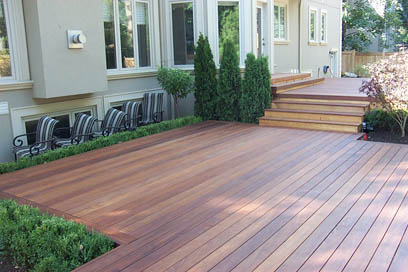
The Truth: If you maintain wood properly, Ipe or Cumaru can last 40+ years and always look fresh with refinishing every few years. Composite looks aged at 10 years and cannot be restored to original appearance—you’re stuck with faded, worn-looking decking. When you factor in the initial cost premium, the maintenance savings become negligible or even negative, depending on whether you DIY wood maintenance or hire professionals.
How to Choose the Right Contractor
Since proper installation matters more than the decking material, here’s how to find a competent builder:
Essential Questions
“How many composite decks have you built, and can I see ones that are 5-10 years old?” If they can’t show you old work in person—not photos, but actual decks you can visit and inspect—walk away immediately. Photos can be staged or borrowed. You need to see real aging composite to understand how their work performs.
“How do you account for thermal expansion in your design?” Should explain gap spacing calculations based on installation temperature, board length, and expected temperature range. If they say “we just leave a small gap,” they don’t understand composite.
“What joist spacing do you use for composite?” Answer should be 12″ on center maximum, often less for residential decks. Some high-end products allow 16″ but it’s not recommended. If they say 16″ is fine for everything, they’re wrong.
“How do you ensure the frame is perfectly flat?” Should describe laser levels, string-line systems, or water levels. “We eyeball it” or “we use a level” isn’t sufficient—composite requires precision far beyond standard level accuracy.
“Are you certified/trained by the specific manufacturer you’re installing (Trex, TimberTech, Fiberon, etc.)?” Critical for warranty coverage. Ask to see certification documentation with current dates. Expired certifications don’t count.
“What’s your process if boards arrive damaged or defective?” Should have clear relationship with supplier and established procedures for handling material issues. If they shrug or say “we’ll deal with it,” they lack the professional relationships needed.
“Have you ever had a composite deck callback, and what was it for?” Everyone has callbacks—it’s how they handle them that matters. If they claim they’ve never had a problem, they’re either lying or haven’t built enough to encounter the inevitable issues.
Red Flags
“It’s the same as building with wood”—Run. This shows fundamental misunderstanding of the material.
Cannot show old composite work or makes excuses about privacy/locations—They’re hiding something.
Lowest bid by significant margin (20%+ below others)—They’re cutting corners somewhere, guaranteed.
No manufacturer training or certification—Your warranty is likely void from day one.
Dismisses expansion concerns or claims “it’s not a big deal”—It is a very big deal.
Uses 16″ joist spacing for composite as standard—Structural inadequacy waiting to happen.
No discussion of temperature at installation—They don’t understand thermal movement.
Pushes heavily toward cheapest offshore products—They’re prioritizing their margin over your results.
Can’t explain their fastening system—Fastening is critical to composite performance.
The Bottom Line
Composite decking isn’t bad—bad installations are bad. This distinction is critical and lost in most discussions about decking materials.
In 2025, the products have improved dramatically from the mold-prone disasters of the early 2000s. Capped composites and solid PVC offerings from established manufacturers like Trex, Azek, and WOLF can deliver on their promises—if installed by the estimated 5-10% of contractors who actually understand the material’s requirements. The technology is sound; the execution in the field is where everything falls apart.
For most homeowners, wood makes more sense economically and practically. You’ll find qualified installers easily—every competent carpenter can build a proper wood deck. Maintenance is predictable and manageable, even enjoyable for some homeowners who take pride in their property. Results are proven over centuries, not marketing-driven projections. You can refinish wood to look new indefinitely; composite stays faded and worn once it ages. The math simply works better for wood in most scenarios, especially if you’re capable of DIY maintenance or live in northern climates where freeze-thaw cycles punish composite products.
If you’re determined to use composite, spend as much time choosing the installer as choosing the product—actually, spend more time on installer selection because that’s where projects fail. Budget for premium materials from stable, established companies only—this is not the place to save money. Verify warranty coverage in writing and understand every exclusion before committing. Insist on seeing old work, minimum five years, preferably eight to ten years old. Don’t compromise on framing quality under any circumstances—a perfect composite installation on a bad frame is still a bad deck.
The worst outcome, which I see multiple times every year, is spending $30,000-40,000 on a composite deck that looks terrible in three years because the framing was wrong. The homeowner borrowed money, expected decades of low-maintenance enjoyment, and got a wavy, saggy, gap-riddled disaster that can’t be fixed without complete teardown and rebuild. This happens every single day across North America because homeowners focus on material selection while ignoring installation quality.
Don’t be that homeowner. Choose wisely, vet thoroughly, and understand that premium materials mean nothing without expert installation.
Reader Experiences Wanted
Have a composite deck story—good or bad? We want to hear from you. Contact us at plans@gardenstructure.com with:
- Product brand and specific product line
- Installation year and approximate cost
- Current condition and any issues encountered
- Geographic location (city/region)
- Photos if possible—before, after, and current condition
- Contractor information (if willing to share)
We’re documenting real-world performance to help other homeowners make informed decisions based on actual outcomes, not marketing promises. Your experience, whether positive or negative, helps others avoid costly mistakes.
Frequently Asked Questions
Q: Is composite decking worth it in 2025? A: If you find a contractor in the top 5-10% who actually knows how to build composite frames correctly. Otherwise, you’re throwing money away. For most homeowners, properly maintained wood delivers better long-term value. If you are serious about using a high end composite- ask to see a 5 year old deck that they built.
Q: Which composite brand is best? A: For northern climates: WOLF or Azek (solid PVC, no wood content). For moderate climates: Trex Transcend or Fiberon Paramount (capped composite). Avoid offshore brands and heavily discounted products regardless of claims. Many Chinese products just do not last.
Q: How much should I expect to pay? A: Quality composite installation runs $25-35 per square foot for labor. Wood ranges from $15-20 (treated lumber) to $20-28 (Ipe/tropical hardwoods). If someone quotes significantly below these ranges, they’re cutting critical corners.
Q: Will composite really last longer than wood?
A: YES, but the frame it is built on may not, unless the builder knew the secrets of building a long lasting frame. That goes for Hardwood decks that may match composite for lifetime. If a deck is going to last 50 years, it needs a frame that will last that long as well.
Q: What about the maintenance savings? A: Mostly marketing fiction. Composite still needs regular cleaning (2x yearly). Wood needs cleaning plus staining (1-2 years). Over 20 years, the maintenance cost difference is $4,000-8,000, but composite costs $4,000-8,000 more upfront. It’s basically a wash.
Q: Why do so many contractors recommend composite? A: Higher profit margins, and the trend is just sexy! They feel that if they are building using high end composite or PVC they are ELITE! Many of these folks don’t revisit jobs after 5 years to see any failures.
Q: Can I install composite decking myself? A: Only if you thoroughly understand thermal expansion calculations, proper joist spacing requirements, and fastening systems. Most DIYers make the same mistakes as professional contractors. If you can build a quality wood deck, stick with wood for DIY projects. If you are serious about building your own deck with PVC or Composite, consider having us design your deck for you.
Q: What’s the biggest mistake homeowners make? A: Choosing the material before choosing the installer. The installer matters 10x more than the brand name on the boards. A mediocre product installed perfectly outlasts a premium product installed poorly.
Q: My deck is only 3 years old and looks terrible. What are my options? A: Document everything with photos and measurements. Review your warranty carefully (it probably excludes what’s wrong). Contact the manufacturer directly—sometimes they’ll help to avoid bad publicity. Consider consulting an independent deck inspector before approaching your installer. Realistically, if the frame is wrong, you’re looking at expensive repairs or replacement.
Q: Should I avoid composite completely? A: No—but be very selective about installers. If you find a certified, experienced composite contractor who can show you multiple 5+ year old successful projects, composite can work well. Just understand what you’re buying: a low-maintenance surface that fades and cannot be renewed, requiring near-perfect installation to avoid catastrophic issues.
The Wall of Shame- Composite Decking Failures Sent in By Readers: